The Effect of Attention on Human Motor Learning
Understanding how attention modulates implicit sensorimotor adaptation and the relationship between explicit action selection and implicit motor execution.
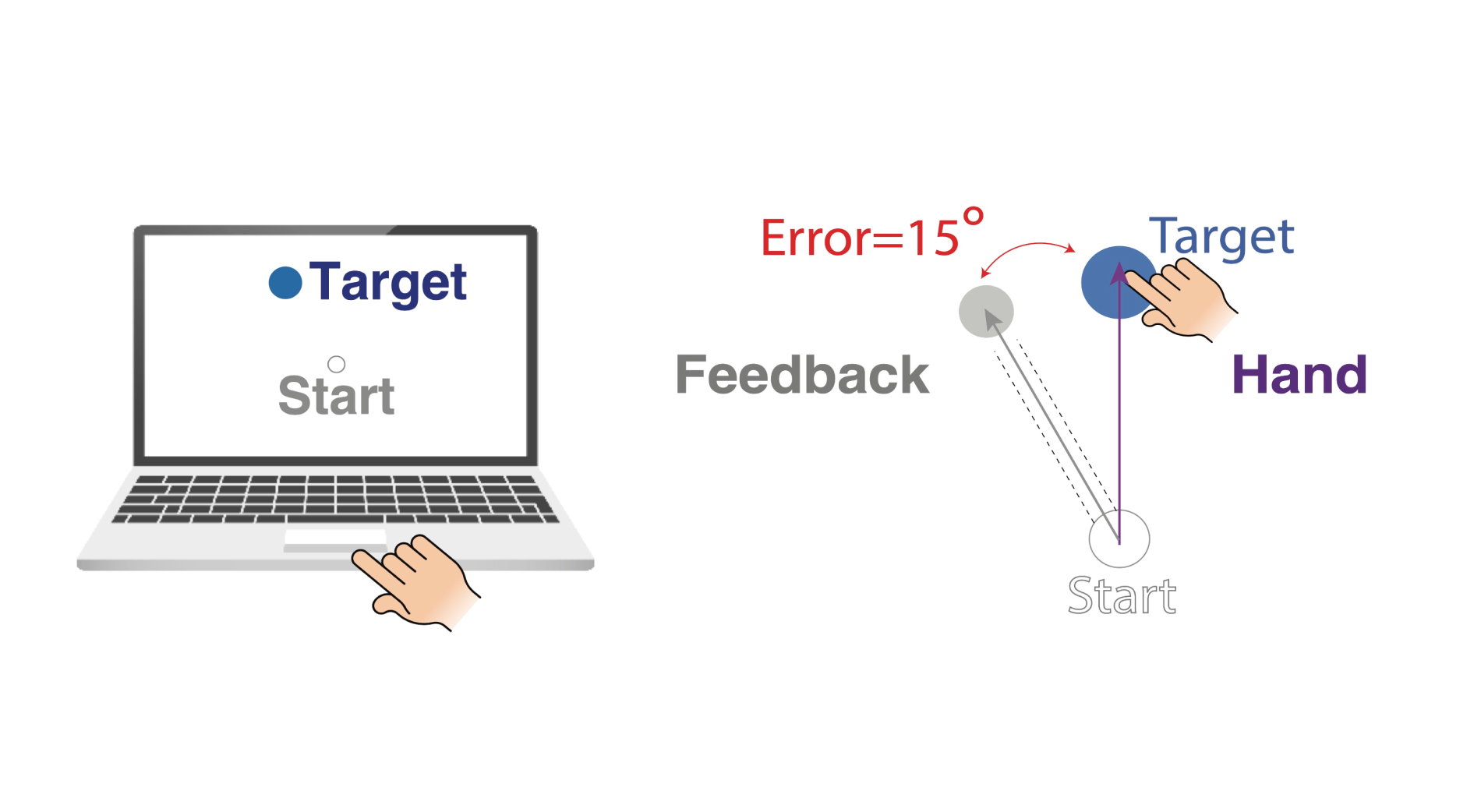
Understanding how attention modulates implicit sensorimotor adaptation and the relationship between explicit action selection and implicit motor execution.
We investigated whether directing attention influences the implicit component of motor learning in trial‑by‑trial visuomotor adaptation tasks. Results support a dissociation between explicit action selection and implicit motor execution, with attention altering learning outcomes in systematic ways. Outputs include a Society for Neuroscience poster and a manuscript in review.
Conscious decisions guide what we do (explicit action selection), while many movements execute without conscious deliberation (implicit motor execution). Prior work separates these systems; we ask: how does attention shape the implicit learning component during adaptation?
1) Test whether attention influences implicit motor learning; 2) Identify which type of attention is involved.
Trial‑by‑trial design; behavioral data cleaning & processing; web‑based tasks (JavaScript/HTML); inferential stats in Python/R.
Led day‑to‑day RA work, coordinated analysis, supported study operations and figure production for dissemination.
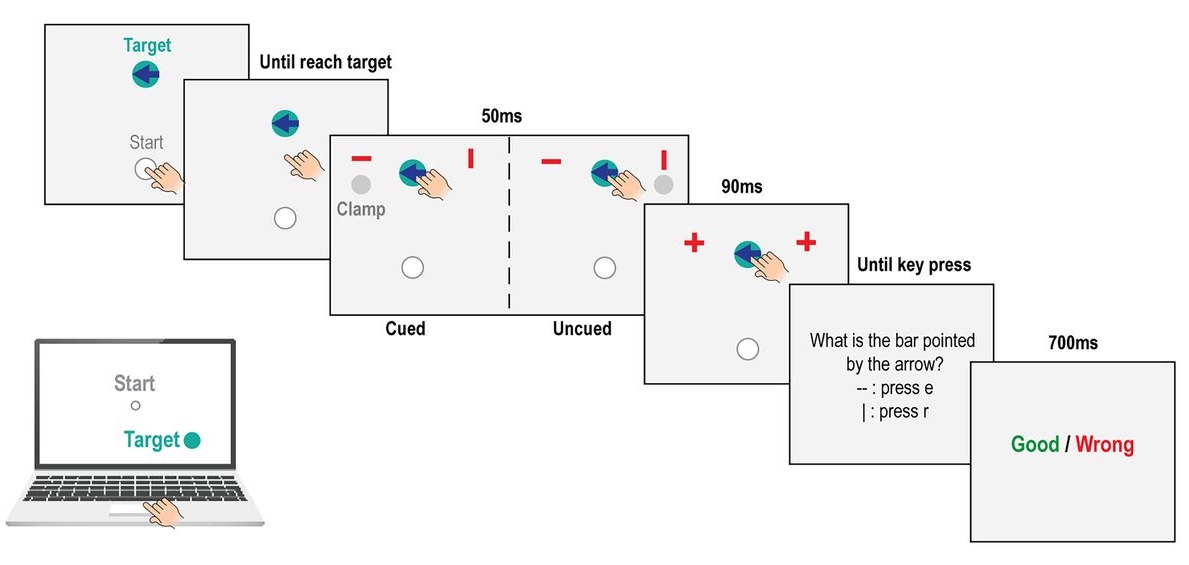
Participants performed reaching tasks with perturbed feedback while attention was manipulated across conditions. Implicit learning was estimated from after‑effects and error‑based updates.
Analyses assessed how attentional focus modulated learning rates and retention, testing dissociations between explicit re‑aiming and implicit recalibration.
Supports a model where attention selectively shapes implicit adaptation while remaining distinct from explicit strategies.
